 Jessica Monroe
 A miscarriage is the loss of a pregnancy before 20 weeks of gestation. It’s far more common than most people realise—affecting approximately 10–20% of known pregnancies. Yet many people go through it without understanding what happens during a miscarriage physically, from cramping and bleeding to the eventual passing of tissue, which can make an already difficult experience even more frightening.
During a miscarriage, the uterus contracts to expel the pregnancy tissue, a process that can range from brief and mild to several days of cramping and bleeding. What happens physically depends significantly on how far along the pregnancy was and whether the miscarriage is complete, incomplete, or missed.
Types of Miscarriage
| Type | What It Means |
|---|---|
| Threatened miscarriage | Bleeding but cervix is closed; pregnancy may continue |
| Inevitable miscarriage | Cervix has opened; pregnancy will not continue |
| Complete miscarriage | All pregnancy tissue has been expelled naturally |
| Incomplete miscarriage | Some tissue remains in the uterus |
| Missed miscarriage | Embryo has died but body hasn’t expelled tissue yet; no bleeding |
| Recurrent miscarriage | Three or more consecutive losses |
What Physically Happens
Early Miscarriage (Under 8 Weeks)
The process is often similar to a heavy, painful period:
- Cramping begins – often more intense than normal period cramps
- Heavy bleeding starts, usually heavier than a typical period
- Passing of clots and grey or pink tissue
- Bleeding typically peaks over 1-3 hours then gradually reduces
- Lighter bleeding may continue for 1-2 weeks
At this stage, the pregnancy tissue is very small and may not be distinguishable from blood clots.
Miscarriage at 8-12 Weeks
The process is similar but more involved:
- Cramping is typically stronger – may require prescription pain management
- Heavier bleeding and larger clots
- More visible tissue may be passed, including the gestational sac
- The process may take several hours
After 12 Weeks
Later miscarriages involve a more labour-like process:
- Stronger contractions
- More significant blood loss
- The fetus is more developed and the process may be more physically and emotionally intense
- Medical management is almost always involved at this stage
The Physical Timeline
| Phase | What Happens | Duration |
|---|---|---|
| Onset | Cramping begins, bleeding starts | Hours |
| Active phase | Heavy bleeding, clots, tissue passage | 3-6 hours typically |
| Slowing | Bleeding reduces, cramping eases | Hours to days |
| Resolution | Light spotting continues | 1-2 weeks |
| Cycle return | Normal period returns | 4-6 weeks |
Medical Management Options
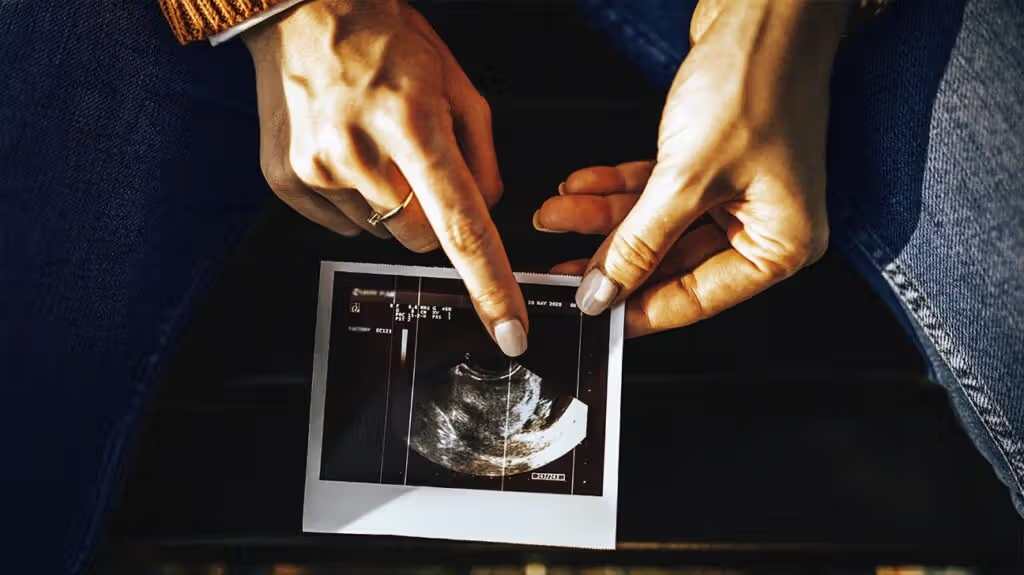
When a miscarriage is confirmed, there are three paths:
| Option | How It Works | Best For |
|---|---|---|
| Expectant management | Wait for natural expulsion | When there’s no infection and patient prefers natural process |
| Medical management | Misoprostol medication accelerates expulsion | Missed miscarriage; wanting to avoid surgery |
| Surgical management (ERPC/D&C) | Procedure to remove remaining tissue | Incomplete miscarriage; significant bleeding; patient preference |
All three options have similar long-term outcomes for future fertility.
Warning Signs That Need Immediate Medical Attention
- Soaking more than 2 pads per hour for 2+ consecutive hours
- Fever above 38°C (100.4°F) – possible infection
- Severe abdominal pain not relieved by pain medication
- Signs of shock (dizziness, rapid heart rate, faintness)
- Foul-smelling discharge
After the Miscarriage
- Pregnancy tests may remain positive for 4-6 weeks as hCG levels fall
- Normal period typically returns in 4-8 weeks
- Ovulation can occur before the first period – physically capable of conceiving again quickly
- Most couples are advised to wait one normal cycle before trying again, though evidence suggests earlier conception doesn’t increase risk
Emotional Reality
The physical process is only part of the experience. Grief after miscarriage is entirely valid and often underacknowledged. Partners grieve differently and simultaneously. Support from SANDS, Tommy’s, or similar organisations, as well as counselling, can be invaluable.
Bottom Line
A miscarriage involves the uterus contracting and expelling pregnancy tissue – a process that can be physically intense, emotionally devastating, and different for every person and every pregnancy. Understanding what’s happening doesn’t make it less painful, but it does remove the layer of confusion and fear about what to expect. Most women go on to have successful pregnancies after miscarriage, and support – medical and emotional – is available throughout the process.