 James Andre
 Low estrogen can make you feel like a different person—exhausted, dry, moody, and struggling with sleep. Whether you’re going through perimenopause, have a medical condition causing low levels, or just suspect your hormones are off, the question of how to restore balance is completely valid.
If you are asking, “how can i raise my estrogen levels quickly,” the fastest and most reliable method is through medical hormone replacement therapy (HRT), which must be prescribed by a doctor after blood testing confirms your levels. While natural approaches—such as consuming phytoestrogens (like soy or flax), dietary adjustments, and lifestyle changes—can support estrogen balance over time, they work much more gradually and are less predictable than clinical treatments.
Here’s an honest breakdown of both routes.
First: Why Might Estrogen Be Low?
Before trying to raise estrogen, it helps to know why it’s low:
| Cause | Details |
|---|---|
| Perimenopause / Menopause | Most common cause in women 40+ |
| Primary ovarian insufficiency | Ovaries stop functioning before age 40 |
| Hypothalamic amenorrhea | Triggered by excessive exercise, low body weight, or chronic stress |
| Hyperprolactinemia | Elevated prolactin suppresses estrogen |
| Eating disorders | Severe caloric restriction suppresses estrogen production |
| Postpartum and breastfeeding | Estrogen drops significantly during and after pregnancy |
| Medical treatments | Chemotherapy, oophorectomy (surgical removal of ovaries) |
Symptoms of Low Estrogen
- Hot flashes and night sweats
- Vaginal dryness and discomfort during sex
- Mood changes – low mood, irritability, anxiety
- Brain fog and difficulty concentrating
- Poor sleep quality
- Low libido
- Dry skin and hair
- Irregular or absent periods
- Bone loss (long-term)
Medical Options (Fastest Route)
Hormone Replacement Therapy (HRT)
If low estrogen is confirmed by blood test, HRT is the most direct and effective approach. It’s available in multiple forms:
| Form | How It’s Used | Onset of Effect |
|---|---|---|
| Oral tablets | Daily pill | 2-4 weeks for symptom relief |
| Patches (transdermal) | Applied to skin every 1-3 days | 2-4 weeks |
| Gels | Applied to arm or thigh daily | 2-4 weeks |
| Vaginal estrogen (local) | Cream, ring, or tablet into vagina | 1-2 weeks for vaginal symptoms |
| Injections | Given by clinician | Faster, but less common |
Modern HRT – particularly transdermal (skin patches or gel) forms – carries a significantly different and more favorable risk profile compared to older studies that used oral synthetic hormones. Many women experience meaningful symptom relief within 2-4 weeks.
If you still have a uterus, progesterone is prescribed alongside estrogen to protect the uterine lining.
Natural Ways to Support Estrogen Levels
These methods support the body’s own estrogen production or mimic estrogen mildly. They work gradually and are most appropriate for mild or borderline deficiency, not severe cases.
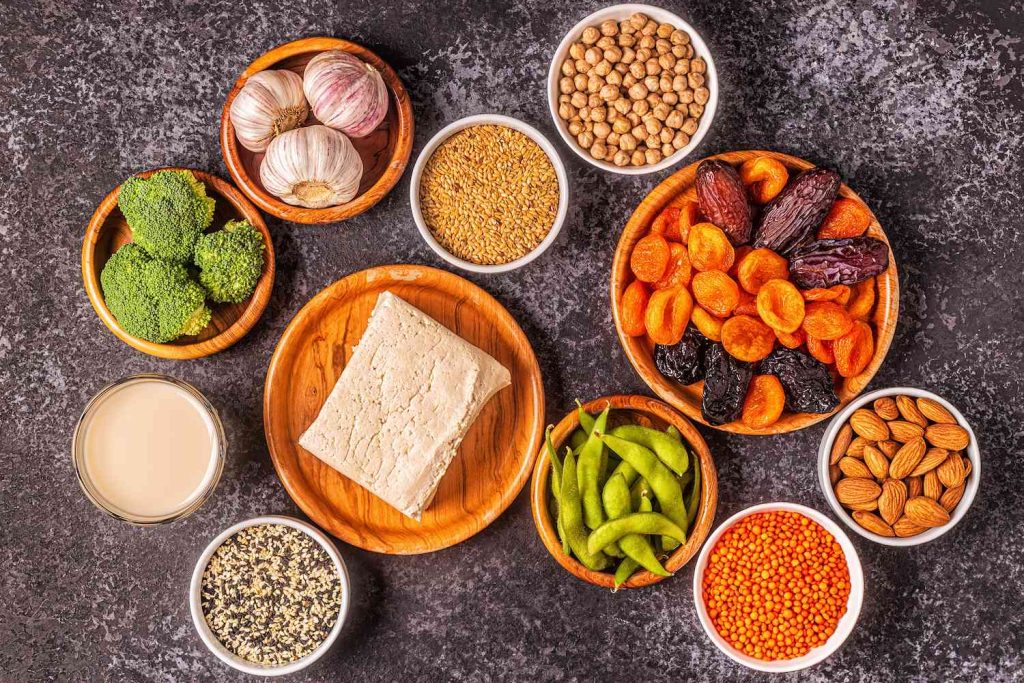
Phytoestrogens in Food
Phytoestrogens are plant compounds that weakly bind to estrogen receptors. They don’t fully replace estrogen, but they may modestly support estrogen signaling.
| Food | Phytoestrogen Type |
|---|---|
| Soy (tofu, tempeh, edamame) | Isoflavones – most potent phytoestrogen |
| Flaxseeds | Lignans – also has beneficial effects on estrogen metabolism |
| Sesame seeds | Lignans |
| Chickpeas, lentils | Isoflavones |
| Red clover | Isoflavones (supplement form common) |
| Oats, barley | Lignans |
Whole soy foods (not supplements) are generally considered safe and may help reduce mild menopause symptoms.
Maintain a Healthy Body Weight
Estrogen is produced in fat tissue (especially after menopause). Very low body weight – particularly from restrictive eating or excessive exercise – suppresses estrogen significantly. For women with hypothalamic amenorrhea, restoring weight and reducing exercise is often the most powerful estrogen-raising intervention.
Reduce Excessive Exercise
Chronic high-intensity exercise without adequate caloric support (common in female athletes and very active women) suppresses the hypothalamic-pituitary-ovarian axis, directly reducing estrogen. This is part of the Female Athlete Triad. Rest and nutritional restoration are required.
Manage Chronic Stress
Chronic stress elevates cortisol, which interferes with estrogen production at multiple points in the hormonal cascade. Stress management – sleep, mindfulness, reducing workload – supports the hormonal environment estrogen needs.
Vitamin D and Zinc
Both support hormonal health generally and are frequently deficient in women with low estrogen. Correcting deficiencies is foundational, though not a direct estrogen-raising strategy on its own.
Black Cohosh (Supplement)
Some women report relief from menopausal symptoms with black cohosh, though research is mixed. It doesn’t appear to directly raise estrogen levels, but may modulate estrogen receptor activity. Discuss with a doctor before using – it’s not appropriate for everyone.
What Does NOT Raise Estrogen (Despite Claims)
- Wild yam cream – contains diosgenin, which cannot be converted to estrogen in the human body (only in a lab)
- DHEA creams (in most cases) – minimal conversion to estrogen when applied topically; effects are modest
- General “hormonal balance” supplements – most are unproven and unregulated
When to See a Doctor
If you suspect low estrogen, get a blood test before starting any supplement or treatment. Estrogen should be tested on specific days of the cycle for premenopausal women (usually days 2-5). Tests include:
Self-treating without knowing your actual levels can lead to the wrong approach, or even supplementing when levels are already adequate.
Bottom Line
The quickest way to raise estrogen is through medical hormone therapy under a doctor’s supervision. Natural methods – phytoestrogen-rich foods, maintaining healthy body weight, reducing excessive exercise and stress – can meaningfully support estrogen balance but work over weeks to months. If you have symptoms of low estrogen, start with a blood test. That result will guide you to the most appropriate solution.